
foto : https://kpi.go.id/
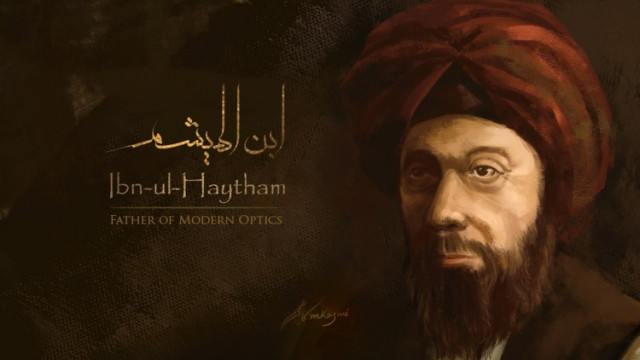
Here is the comprehensive information about Ibn al-Haytham, the medieval Muslim scientist whose works transformed human understanding of science, particularly in the field of optics, translated into English.
Brief Profile
Full Name: Abu Ali al-Hasan ibn al-Hasan ibn al-Haytham
Western Name: Alhazen
Born: Around 965 CE in Basra, Iraq (during the Abbasid Caliphate)
Died: Around 1040-1041 CE in Cairo, Egypt
Area of Expertise: A polymath (an expert in multiple fields) who mastered optics, mathematics, astronomy, physics, and philosophy.
Major Contributions and Discoveries
1. Father of Modern Optics and “Kitab al-Manazir” His greatest work is Kitab al-Manazir (Book of Optics), consisting of seven volumes. This work was highly revolutionary and laid the foundation for modern optics.
Theory of Vision: Before Ibn al-Haytham, Greek scientists like Euclid and Ptolemy believed humans could see because the eyes emitted rays toward objects (Emission Theory). Ibn al-Haytham proved otherwise: objects reflect light from a light source (like the sun) in all directions, and these reflected rays enter the human eye, allowing us to see (Intromission Theory).
Anatomy of the Eye: He described the anatomy of the eye in detail and explained how the lens plays a role in forming images.
Camera Obscura (Pinhole Camera): He was the first scientist to provide a systematic and mathematical explanation of the camera obscura phenomenon (a dark room with a small hole that projects an inverted image from the outside). This principle is the forerunner of the modern camera.
2. Pioneer of the Scientific Method Hundreds of years before Western scientists like Francis Bacon or René Descartes formulated the scientific method, Ibn al-Haytham had strictly applied it. He did not believe in theories based purely on philosophical thought. He insisted that a hypothesis must be proven through repeatable physical experiments and mathematical proofs. This empirical approach is what separated science from philosophy.
3. Mathematics and Physics
Alhazen’s Problem: In geometry, he formulated a complex problem regarding spherical (curved) mirrors that challenged mathematicians for centuries before finally being solved using advanced algebra.
Laws of Refraction and Reflection: He studied how light bends when passing through different mediums (such as from air to water or glass) and explained the phenomenon of lens magnification.
4. Astronomy In his book Al-Shukuk ‘ala Batlamyus (Doubts Concerning Ptolemy), he criticized Ptolemy’s geocentric (Earth-centered) solar system model because he found many mathematical and physical inconsistencies within it. His insights later influenced Renaissance astronomers in their search for a more logical model of the solar system.
A Unique Life Journey (Myths and Facts)
There is a famous story regarding his move to Egypt. Ibn al-Haytham once claimed he could build a dam on the Nile River to control its annual flooding. Caliph Al-Hakim bi-Amr Allah of the Fatimid Dynasty in Egypt invited him to realize the project.
After surveying the Nile in person, Ibn al-Haytham realized the project was impossible with the technology available at that time. Fearing the wrath of the famously erratic and cruel Caliph, Ibn al-Haytham feigned madness. He was subsequently placed under house arrest for 10 years (1011–1021 CE) until the Caliph’s death. It was during this period of isolation that he had the time to focus on studying light and writing his masterpiece, Kitab al-Manazir.
Legacy
Ibn al-Haytham’s works were translated into Latin in the 12th and 13th centuries, exerting a massive influence on the development of science in Europe. Great scientists like Roger Bacon, Johannes Kepler, Galileo Galilei, and Isaac Newton were deeply indebted to the optical principles he discovered.
To honor his contributions, his name was immortalized as a crater on the Moon (Alhazen Crater) and an asteroid (59239 Alhazen).
Amir Maulana – SKYWORLD
Berikut adalah informasi komprehensif mengenai Ibnu Haitham, ilmuwan Muslim abad pertengahan yang karya-karyanya mengubah cara manusia memahami sains, terutama di bidang optik.
Profil Singkat
Nama Lengkap: Abu Ali al-Hasan bin al-Hasan bin al-Haytham
Nama Barat: Alhazen
Lahir: Sekitar tahun 965 M di Basra, Irak (pada masa Kekhalifahan Abbasiyah)
Wafat: Sekitar tahun 1040-1041 M di Kairo, Mesir
Bidang Keahlian: Polimath (pakar di banyak bidang) yang menguasai optik, matematika, astronomi, fisika, dan filsafat.
Kontribusi dan Penemuan Utama
1. Bapak Optik Modern dan “Kitab al-Manazir” Karya terbesarnya adalah Kitab al-Manazir (Buku tentang Optik) yang terdiri dari tujuh volume. Karya ini sangat revolusioner dan menjadi dasar bagi ilmu optik modern.
Teori Penglihatan: Sebelum Ibnu Haitham, ilmuwan Yunani seperti Euclid dan Ptolemeus percaya bahwa manusia bisa melihat karena mata memancarkan sinar ke arah benda (Teori Emisi). Ibnu Haitham membuktikan sebaliknya: benda memantulkan cahaya dari sumber cahaya (seperti matahari) ke segala arah, dan pantulan cahaya tersebutlah yang masuk ke dalam mata manusia sehingga kita bisa melihat (Teori Intromisi).
Anatomi Mata: Ia mendeskripsikan anatomi mata secara rinci dan bagaimana lensa mata berperan dalam membentuk gambar.
Kamera Obscura (Kamera Lubang Jarum): Ia adalah ilmuwan pertama yang memberikan penjelasan sistematis dan matematis tentang fenomena kamera obscura (ruang gelap dengan lubang kecil yang memproyeksikan gambar terbalik dari luar). Prinsip ini adalah cikal bakal kamera modern.
2. Perintis Metode Ilmiah Ratusan tahun sebelum ilmuwan Barat seperti Francis Bacon atau René Descartes merumuskan metode ilmiah, Ibnu Haitham telah menerapkannya secara ketat. Ia tidak percaya pada teori yang hanya berdasarkan pemikiran filosofis murni. Ia bersikeras bahwa sebuah hipotesis harus dibuktikan melalui eksperimen fisik yang dapat diulang dan pembuktian matematis. Pendekatan empiris inilah yang memisahkan sains dari filsafat.
3. Matematika dan Fisika
Masalah Alhazen (Alhazen’s Problem): Dalam geometri, ia merumuskan masalah kompleks mengenai cermin sferis (melengkung) yang menantang para matematikawan selama berabad-abad sebelum akhirnya dipecahkan menggunakan aljabar tingkat lanjut.
Hukum Pembiasan (Refraksi) dan Pemantulan (Refleksi): Ia meneliti bagaimana cahaya melengkung saat melewati medium yang berbeda (seperti dari udara ke air atau kaca) dan menjelaskan fenomena pembesaran lensa.
4. Astronomi Dalam bukunya Al-Shukuk ‘ala Batlamyus (Keraguan terhadap Ptolemeus), ia mengkritik model tata surya geosentris (bumi sebagai pusat) buatan Ptolemeus karena menemukan banyak inkonsistensi matematis dan fisik di dalamnya. Pemikirannya ini kelak mempengaruhi astronom-astronom Renaisans dalam mencari model tata surya yang lebih logis.
Perjalanan Hidup yang Unik (Mitos dan Fakta)
Ada sebuah kisah terkenal mengenai kepindahannya ke Mesir. Ibnu Haitham pernah mengklaim bahwa ia bisa membangun bendungan di Sungai Nil untuk mengendalikan banjir tahunan. Khalifah Al-Hakim bi-Amr Allah dari Dinasti Fatimiyah di Mesir mengundangnya untuk mewujudkan proyek tersebut.
Setelah mensurvei Sungai Nil secara langsung, Ibnu Haitham menyadari bahwa proyek itu mustahil dilakukan dengan teknologi pada masa itu. Karena takut akan kemarahan Khalifah yang dikenal kejam, Ibnu Haitham pura-pura gila. Ia kemudian ditahan di rumahnya (tahanan kota) selama 10 tahun (1011–1021 M) hingga sang Khalifah wafat. Di masa isolasi inilah ia justru memiliki waktu untuk fokus meneliti cahaya dan menulis mahakaryanya, Kitab al-Manazir.
Warisan
Karya-karya Ibnu Haitham diterjemahkan ke dalam bahasa Latin pada abad ke-12 dan ke-13, memberikan pengaruh yang sangat besar bagi perkembangan sains di Eropa. Ilmuwan besar seperti Roger Bacon, Johannes Kepler, Galileo Galilei, hingga Isaac Newton sangat berutang budi pada prinsip optik yang ia temukan.
Untuk menghormati jasa-jasanya, namanya diabadikan sebagai nama sebuah kawah di Bulan (Kawah Alhazen) dan sebuah asteroid (59239 Alhazen).
Amir Maulana – SKYWORLD